20 Aug
Saluki Dogs in the UAE: Complete Breed Guide for Pet Parents
Elegant, fast and deeply connected to the history of the Middle East, the Saluki is unlike most dog breeds you will come across. Known for its slim build, incredible speed and independent personality, this ancient sighthound has been valued for thousands of years as a hunting companion.
Today, Salukis can still be found in homes across the UAE. Whether you are considering one of the most popular dog breeds in the UAE or a more distinctive breed like the Saluki, it is important to understand the exercise, training and lifestyle needs involved.
If you are thinking about getting a Saluki or already share your home with one, here is what you need to know.
History of Saluki Dog Breed
The Saluki is an ancient sighthound originating from the Middle East. The breed was traditionally used for hunting and developed to spot and chase prey across open terrain. The Federation Cynologique Internationale (FCI) classifies the Saluki as a sighthound and lists the Middle East as its country of origin.
The breed has a long connection with Arab culture and desert life. Historically, Salukis were highly valued by Bedouin communities for their hunting ability, speed and endurance.
What Does a Saluki Look Like?
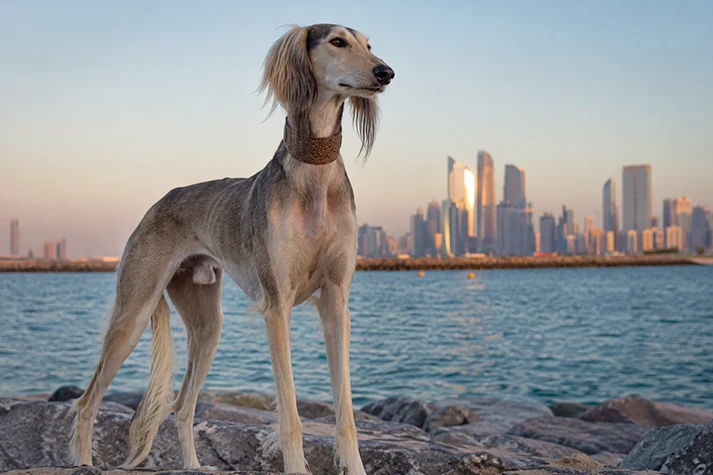
A Saluki has a tall, slim and athletic body designed for speed rather than bulk. It has a long, narrow head, deep chest, long legs, a flexible body and a long tail.
The breed has two coat varieties: smooth and feathered. Feathered Salukis have longer, silky hair around areas such as the ears, tail and backs of the legs, while smooth Salukis have a shorter coat.
Some of the Saluki's main physical characteristics include:
- Height: Males generally stand around 58 to 71 cm at the shoulder, with females proportionately smaller.
- Build: Slim, athletic and long-legged.
- Coat: Smooth or feathered.
- Colours: Cream, white, fawn, red, golden, grizzle and tan, black and tan, and tricolour.
- Distinctive features: A long head, deep chest, graceful body and long tail.
Their appearance reflects what the breed was developed to do: run quickly and efficiently across open ground.
What Is a Saluki's Temperament Like?
Salukis are gentle, intelligent and loyal, but they are also independent dogs. They often form strong bonds with their families while remaining reserved around people they do not know.
A Saluki is generally:
- Affectionate with its family
- Independent rather than constantly seeking attention
- Reserved around unfamiliar people
- Intelligent, but not always eager to obey
- Sensitive to harsh treatment
- Naturally inclined to chase because of its sighthound background
If you are bringing a Saluki home for the first time, give it some time to settle into its surroundings. Understanding the adjusting time for dogs in new home can help you set realistic expectations, particularly with an independent and sensitive breed like the Saluki.
Are Salukis Good Family Dogs?

A well-socialised Saluki can be a loving and loyal family companion, particularly in a calm household. However, they are not necessarily the right choice for every family.
Families with young children should supervise interactions and teach children how to respect the dog's space. Salukis may also chase cats, rabbits and other small animals because of their hunting background.
They can be surprisingly calm indoors when their physical and mental needs are being met. The key is not simply how much space your home has, but whether you can provide the exercise and stimulation the dog needs.
How Much Exercise Does a Saluki Need?
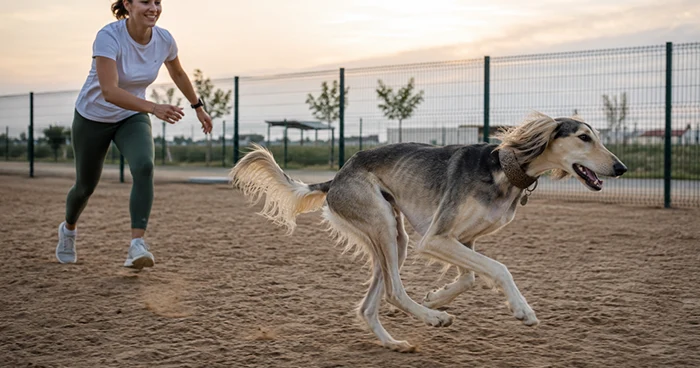
Salukis are built to run. Regular short walks alone may not be enough to satisfy such an athletic dog. The Kennel Club lists the Saluki as a breed requiring more than two hours of exercise per day.
A Saluki's routine should ideally include:
- Daily walks at suitable times
- Safe opportunities to run, preferably in a fully enclosed area
- Mental stimulation through games, training and enrichment
- Activities suited to sighthounds, such as controlled running or lure-based activities
Because Salukis have a strong prey drive, off-leash exercise should only happen in a secure, enclosed space. An open park or desert area can be risky because their speed and chasing instinct can make them extremely difficult to catch.
How Do You Care for a Saluki in the UAE Heat?
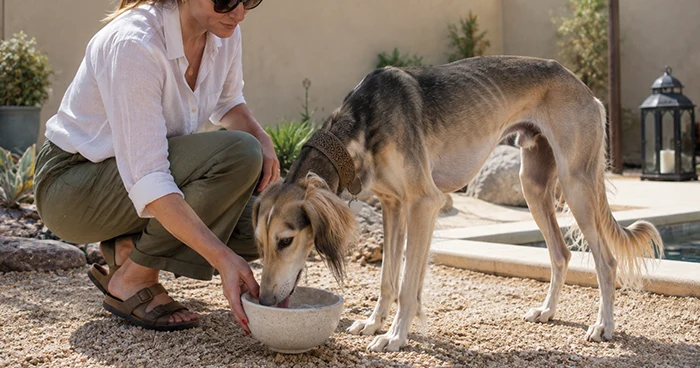
The Saluki's long history in the Middle East does not mean it is immune to UAE temperatures. Like any dog, it can be affected by excessive heat, particularly during the hottest months of the year. Their exercise routine should be adjusted according to the weather.
During the hotter months:
- Exercise during the cooler parts of the day.
- Keep fresh drinking water available at all times.
- Provide a cool, comfortable indoor space.
- Check pavement and sand before walks to make sure they are not dangerously hot.
- Avoid strenuous outdoor exercise during extreme temperatures.
- Watch your dog for signs of heat stress and seek veterinary help if you are concerned.
It is also important to remember that hot ground can burn a dog's paws. A quick hand check of the pavement or walking surface before heading out can prevent an uncomfortable walk.
These precautions are also important when planning pet travel within or from the UAE, particularly during the hotter months. Exercise, transport and waiting times should all be planned around your dog's comfort and safety.
How Much Grooming Does a Saluki Need?
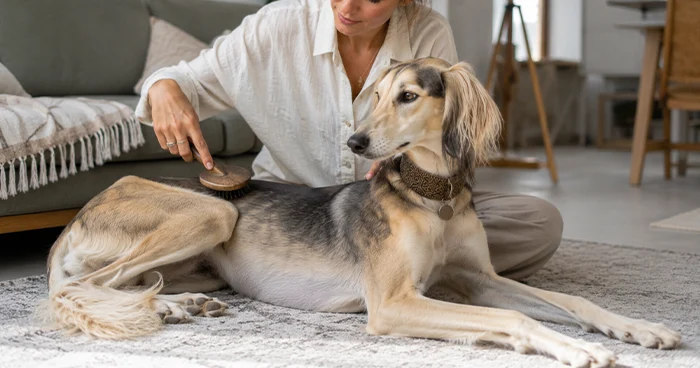
Fortunately, Salukis are relatively low-maintenance when it comes to grooming compared with many long-coated breeds.
A weekly brush is generally enough to keep the coat clean and free from tangles. Feathered Salukis may need a little more attention around their ears, tail and leg feathering, while smooth Salukis require less coat maintenance.
Regular nail trimming, dental care and ear checks should also be part of their routine. Grooming is a good opportunity to notice changes such as skin irritation, lumps or other issues that may need veterinary attention.
What Health Problems Can Salukis Have?
Salukis are generally considered a healthy breed, but they can still develop health problems. Some inherited or breed-associated concerns include certain eye conditions, which is why responsible breeding and regular veterinary care are important.
Dental health also deserves attention. Regular brushing and professional dental care when recommended by your veterinarian can help maintain good oral health.
If you are buying a Saluki puppy, ask the breeder about the health history of both parents and any relevant health screening. A responsible breeder should be comfortable discussing health rather than focusing only on appearance.
How Long Do Salukis Live?
Salukis can have a relatively long lifespan for a dog. Breed and veterinary sources commonly place their lifespan at around 10 to 17 years, although individual dogs can vary. Genetics, nutrition, exercise, dental care and regular veterinary check-ups all play a role in a dog's long-term health.
Keeping your Saluki at a healthy weight and providing appropriate exercise throughout its life can also support its mobility and overall quality of life.
Conclusion: Is a Saluki the Right Dog for You?
A Saluki can be an exceptional companion for the right pet parent. They are graceful, affectionate with their families and capable of forming a close bond with their people.
But they are not a low-effort breed simply because they have a short or silky coat.
A Saluki may be a good fit if you can provide:
- Plenty of daily exercise
- Secure spaces where it can run safely
- Patient and positive training
- Regular companionship
- Careful exercise planning during the UAE summer
- Consistent veterinary, dental and grooming care
If you can meet those needs, living with a Saluki can be a wonderfully rewarding experience.
Now, if you are moving to or from the UAE with a Saluki, planning the journey well in advance is equally important. A reliable pet relocation company in UAE can help pet parents understand the documentation, travel requirements and arrangements involved in relocating a dog safely.
FREQUENTLY ASKED QUESTIONS &
Are Salukis high-maintenance dogs?
Salukis are relatively easy to groom, but their exercise, training and companionship needs can make them demanding for some households. Their coat generally needs weekly brushing, while their athletic nature means they need plenty of physical activity.
Are Salukis suitable for UAE’s hot weather?
Salukis have a long history in the Middle East, but this does not make them immune to heat. UAE pet parents should still limit strenuous activity during extreme temperatures and provide plenty of water, shade and access to a cool indoor space.
Are Salukis good with other pets?
It depends on the individual dog and its socialisation. However, Salukis have a strong natural prey drive and may chase smaller animals. Extra care is therefore needed in homes with cats or other small pets.
Are Salukis Easy to Train?
Not always. Salukis are intelligent but independent, so training can be challenging. Short, positive sessions, early socialisation, consistent rules and reward-based training work best. Recall needs extra attention, as their strong prey drive means off-leash exercise is safest in a secure, fenced area.
Is a Saluki a good dog for first-time pet parents?
A Saluki may be challenging for a first-time dog owner because of its independent personality, high exercise needs and strong prey drive. An owner who is prepared to provide patient training and appropriate exercise can still have a very rewarding experience with the breed.


AUTHOR’S BIO
Shivangi Lawania
Storytelling is my way of bringing ideas to life. I enjoy shaping words that spark curiosity and connection, while keeping a strong focus on branding and communication. For me, great content blends creativity with clarity to leave a lasting impression.