01 Jun
Pet Cargo vs Excess Baggage in the UAE: Which Is the Safer and Cheaper Option for Your Pet?
Most pets entering Dubai and the UAE are required to arrive as manifest cargo under current UAE import procedures. While excess baggage is often the cheaper option for eligible outbound flights, manifest cargo is usually the safer and legally required choice for international pet relocation into the UAE.
That’s the short answer. The longer answer depends on your airline, destination country, pet breed, travel season, and whether your pet is flying into or out of the UAE. Many pet owners assume “cargo” is unsafe, but for long international journeys, it’s often the more structured and reliable option.
The challenge is that airline policies, UAE import rules, and seasonal restrictions don’t always make this obvious. That’s where confusion, and expensive mistakes, usually happen.
What Is Pet Cargo?
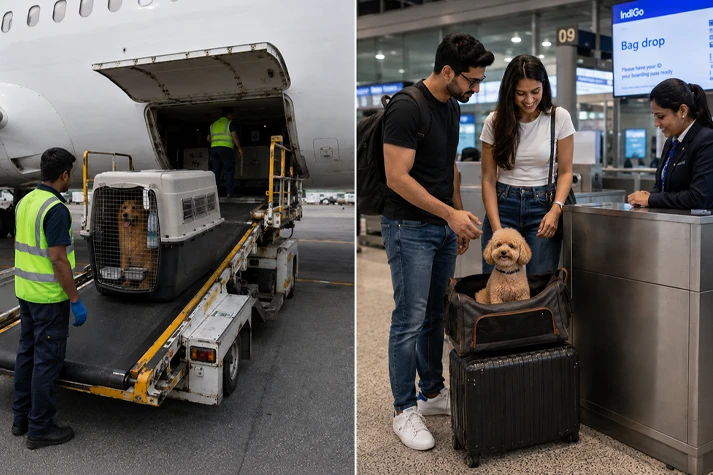
Pet cargo, also called manifest cargo, means your pet travels through an airline’s dedicated cargo system rather than being attached directly to your passenger booking.
Pets still travel in a temperature-controlled aircraft hold, often on the same flight as the owner. For pets entering the UAE, this is typically the required method.
Manifest cargo shipments usually involve:
- Air Waybill (AWB) tracking
- Cargo terminal processing
- Customs clearance
- MOCCAE import permits
- Dedicated animal handling teams
- More detailed documentation checks
This system is commonly used for international relocation, long-haul travel, large breeds, and countries with strict import rules.
Airlines such as Emirates handle animal transport through Emirates SkyCargo, which includes specialised live animal handling procedures during transit through Dubai.
What Does Excess Baggage Mean for Pet Travel?
Excess baggage, sometimes called accompanied baggage, means your pet travels under your own flight booking rather than through a cargo airway bill. Your pet usually travels in the aircraft hold as checked baggage unless the airline offers a cabin option for small pets.
Compared to manifest cargo, excess baggage is usually cheaper and easier to arrange.
This option works best for:
- Shorter flights
- Outbound UAE travel
- Smaller pets
- Simpler relocation routes
However, it’s important to understand the limitations. Not all airlines allow pets as excess baggage, and many countries, including the UAE for incoming pets, require animals to arrive as manifest cargo instead. That’s why excess baggage is often possible for leaving the UAE, but not for entering it.
Pet Cargo vs Excess Baggage: Full Comparison
| Feature | Excess Baggage | Manifest Cargo |
| Cost | Lower | Higher |
| UAE arrivals allowed? | Generally no | Yes |
| Owner required on flight? | Yes | No |
| Tracking | Limited | AWB tracking available |
| Customs clearance | Minimal | Required |
| Handling process | Standard baggage handling | Dedicated cargo handling |
| Suitable for large breeds | Limited | Better suited |
| Best for | Short-haul eligible routes | International relocation |
| Transit management | Basic | More structured |
| Documentation | Simpler | More detailed |
Is Pet Cargo Safer Than Excess Baggage?
For long international journeys, manifest cargo is generally considered the safer option. While many pet owners worry about the word “cargo,” live animals are handled very differently from regular freight.
Both methods use temperature-controlled aircraft holds. The main difference is handling and transit management.
With manifest cargo:
- Pets are handled by dedicated cargo teams
- Documentation checks are more structured
- Transit coordination is usually smoother
- Tracking and monitoring are better
This becomes especially important during long layovers, multi-country routes, summer travel, and large-breed transport.
Snub-nosed breeds like Bulldogs, Pugs, and Persian cats face higher respiratory risks during flights. Because of this, airlines including Emirates may apply seasonal restrictions, particularly during hotter months.
Which Option Is Cheaper in the UAE?
In most cases, excess baggage is cheaper than manifest cargo because the process is simpler.
With excess baggage, airlines mainly charge based on:
- Kennel size
- Pet weight
- Baggage handling
Manifest cargo includes additional costs such as:
- Cargo terminal handling
- Customs clearance
- Air Waybill processing
- Documentation checks
- Import/export coordination
For outbound UAE flights, excess baggage fees often start from a few hundred AED and increase depending on the airline, route, crate size, and total weight.
Manifest cargo can cost several thousand AED for large dogs, long-haul journeys, or countries with strict import rules.
Government-related charges may also apply, including MOCCAE permit fees. A significant part of the cost comes from compliance checks, customs procedures, and specialised handling.
UAE Rules Every Pet Owner Should Know
This is where many relocation plans go wrong. Most pets entering Dubai, Abu Dhabi, or Sharjah are required to arrive as manifest cargo under current UAE import regulations.
That means pet owners typically need:
- A valid import permit
- Microchip documentation
- Rabies Titer Test Reports
- Health certificate
- IATA-approved crate
Destination-country rules matter too. Countries such as the UK, Australia, New Zealand, and Hong Kong also require pets to enter through cargo systems rather than excess baggage. This often surprises first-time pet owners because airline policies can be confusing.
Breed restrictions are another major factor. Certain dog breeds are restricted or banned in parts of the UAE, and airlines may impose additional operational limitations.
Flying Pets from the UAE During Summer
From May to September, Gulf temperatures can heavily affect pet travel operations.
Airlines may:
- Suspend pet transport temporarily
- Reject snub-nosed breeds
- Limit daytime departures
- Apply additional heat restrictions
For example, some airlines may refuse pet bookings if airport temperatures exceed operational safety thresholds. A route approved in February may not be approved during peak UAE summer months.
A Common Mistake UAE Pet Owners Make
Many people planning pet travel from the UAE book their own flights first and only check pet eligibility afterward. A destination country may require manifest cargo even if the airline itself technically allows excess baggage.
A pet approved during winter may also face summer restrictions because of breed or temperature limits.
IATA-approved crates must allow pets to:
- Stand naturally
- Turn comfortably
- Lie down without restriction
If the crate does not meet airline standards, pets can be refused at check-in. These small details often cause major delays.
When Excess Baggage Makes Sense
Excess baggage can work well if:
- You are flying outbound from the UAE
- The airline permits accompanied pets
- The destination country allows it
- Your route is relatively short
- Your pet is small to medium-sized
- The journey is straightforward
For simple trips, it can reduce costs significantly.
When Manifest Cargo Is the Better Choice
Manifest cargo is usually the smarter option for:
- Pets entering the UAE
- International relocation
- Large breeds
- Long-haul flights
- Multi-stop journeys
- Complex documentation requirements
- Professional relocation coordination
It also becomes necessary when the owner is not travelling, destination-country regulations require cargo entry, or a pet relocation service in UAE is coordinating the journey through cargo channels.
Conclusion
If your route qualifies and your airline permits it, excess baggage can absolutely be the cheaper option for flying pets out of the UAE. But for pets entering the UAE, especially during international relocation, manifest cargo is usually the legally required and operationally safer choice.
That’s why successful pet travel planning depends on understanding destination-country regulations, airline-specific restrictions, seasonal limitations, breed eligibility, crate sizing requirements, and transit conditions.
Planning early makes pet travel significantly smoother.
FREQUENTLY ASKED QUESTIONS &
Do all pets flying to Dubai have to travel as manifest cargo?
Yes. Pets arriving into Dubai, Abu Dhabi, or Sharjah generally must enter as manifest cargo under UAE import regulations. Excess baggage is typically not allowed for incoming pets, although limited airline exceptions may occasionally apply for specific cabin-approved small pets.
Is pet cargo cheaper than excess baggage in the UAE?
Usually no. Excess baggage is generally the cheaper option because it involves fewer operational and customs procedures. Manifest cargo includes cargo terminal handling, documentation checks, clearance coordination, and import processing fees.
Is it safe for my pet to travel as cargo on UAE airlines?
Yes, when booked correctly. Airlines transport pets in temperature-controlled and pressurised aircraft holds. Manifest cargo also tends to provide more structured handling and tracking for long international journeys. However, snub-nosed breeds may face additional restrictions because of respiratory risks.
Can I fly my pet from Dubai during summer?
Possibly, but summer restrictions are common. During extreme heat periods between May and September, airlines may limit or suspend pet travel for certain breeds, particularly brachycephalic dogs and cats. Planning well in advance is strongly recommended.
What documents do I need to fly my pet from the UAE?
Most international pet travel requires microchip documentation, rabies vaccination records, health certificate, MOCCAE permits, IATA-approved travel crate, and destination-country import approval where applicable. Requirements vary depending on the airline and destination country.





AUTHOR’S BIO
Shivangi Lawania
Storytelling is my way of bringing ideas to life. I enjoy shaping words that spark curiosity and connection, while keeping a strong focus on branding and communication. For me, great content blends creativity with clarity to leave a lasting impression.